FTTH Solutions
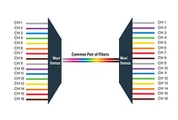
CWDM has 18 different wavelength channels, and the different wavelengths of each channel are separated by 20nm, using wavelengths from 1270 nm to 1610 nm. Gracy Fiber offers solutions for spectral multiplexing in optical transmission systems, based on passive CWDM technology. These solutions are compatible with modern active network equipment and allow multiplexing of different traffic flows like 10/100/1000/10G/100G Ethernet, SDH (STM 1/4/16/64), ATM, ESCON, Fibre Channel, FTTx, and CATV over one or two optical fibers.

- Product Introduction
FTTH (Fiber to the Home) is a broadband network architecture that brings high-speed fiber optic communication directly to residential homes and businesses. It provides an incredibly fast and reliable internet connection by using optical fiber cables to transmit data as pulses of light.
Solutions
1. Optical Line Terminal (OLT): The OLT is a device located at the service provider's central office or data center. It aggregates and manages the traffic from multiple customer connections and interfaces with the wider internet or network.
2. Optical Network Terminal (ONT) or Optical Network Unit (ONU):** The ONT or ONU is installed at the customer's premises, converting the optical signals back into electrical signals that can be used by devices like computers, phones, and routers. It also provides various interfaces (Ethernet, Wi-Fi, etc.) for connecting devices.
3. Fiber Cabling: High-quality optical fiber cables are used to transmit data signals over long distances with minimal signal loss. These cables are typically buried underground, run along utility poles, or deployed through other suitable methods.
4. Installation: The process begins with the installation of the optical fiber cable from the central office to the customer's location. This might involve trenching, aerial deployment, or other techniques, depending on local regulations and infrastructure.
5. Connection Setup: Once the fiber is installed, the ONT/ONU is connected to the customer's devices, such as computers, routers, and phones. This establishes the high-speed broadband connection.

Solution Highlights
1. High-Speed Internet: FTTH provides significantly higher speeds compared to traditional copper-based broadband technologies like DSL (Digital Subscriber Line) or cable internet.
2. Reliability: Fiber optic cables are less susceptible to interference and signal degradation over longer distances, resulting in a more stable and reliable connection.
3. Symmetrical Speeds: FTTH solutions often offer symmetrical upload and download speeds, which is important for activities like video conferencing, online gaming, and cloud-based applications.
4. Scalability: The capacity of fiber optic cables is much higher than other technologies, making it easier to accommodate future increases in data demand.
5. Future-Proofing: FTTH is considered a future-proof technology, capable of supporting the ever-increasing bandwidth requirements of emerging applications and services.
6. Low Latency: Fiber-optic connections generally have lower latency, which is important for real-time applications like online gaming and video conferencing.

Related Products


Related Video