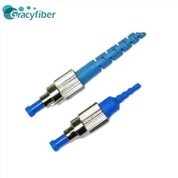
SC/APC Fiber Optic Connector-Shutter Fiber Optic Connector
Our SC/APC fiber optic connectors use advanced APC swash technology to ensure the lowest plug loss and highest return loss. This means you can enjoy stable signal transmission with less signal attenuation and interference, resulting in improved network performance and data transmission quality. Compared to traditional connectors, our SC/APC connectors enable better alignment and stability during the connection process. Whether in a data center, fiber optic switch or other high-density connectivity environment, our connectors easily cope and ensure accurate fiber alignment to maximize transmission efficiency.

- Product Introduction
Our SC/APC fiber optic connectors use advanced APC swash technology to ensure the lowest plug loss and highest return loss. This means you can enjoy stable signal transmission with less signal attenuation and interference, resulting in improved network performance and data transmission quality. Compared to traditional connectors, our SC/APC connectors enable better alignment and stability during the connection process. Whether in a data center, fiber optic switch or other high-density connectivity environment, our connectors easily cope and ensure accurate fiber alignment to maximize transmission efficiency.
With a focus on product quality and reliability, all of our SC/APC fiber connectors undergo rigorous testing and quality control to ensure their long-term stable operation. Our connectors meet international standards and are compatible with a wide range of fiber optic equipment, providing you with greater flexibility and convenience. Whether you are building a new fiber optic network or upgrading an existing one, our SC/APC fiber optic connectors can meet your needs. Not only do they offer excellent performance, they also feature easy installation and maintenance, saving you time and cost.
Product Features
1. High-precision connection: SC/APC fiber optic connectors are designed with precision ceramic inserts and beveled physical interfaces to ensure stable and reliable connections between optical fibers. This connector is suitable for fiber optic networks that require high precision transmission, such as data centers, telecom infrastructure, etc.
2. Low insertion loss and reflection loss: SC/APC fiber optic connectors have excellent optical performance to minimize insertion loss and reflection loss. This means that during signal transmission, the connector attenuates and reflects very little of the optical signal, thus providing more stable and high-quality signal transmission.
3. Durability and Reliability: SC/APC fiber optic connectors are manufactured with high quality materials that provide excellent durability and reliability. They can withstand environmental factors such as high temperature, humidity and mechanical stress to ensure long-term stable performance.
4. Easy to install and maintain: SC/APC fiber optic connectors are designed with simple plugging and unplugging, making them very easy to install and maintain. Users only need to insert the connector into the corresponding interface to complete the connection. In addition, the connectors are compact and take up little space, making them suitable for high-density fiber optic cabling environments.
Product Image

Product Applications
1. Data center network: SC/APC fiber optic connectors are widely used in data center networks to connect servers, network equipment and storage devices. Its low insertion loss and high reflection loss characteristics make it an ideal choice for data center networks.
2. Research Labs: In the research field, SC/APC fiber optic connectors are widely used to connect laboratory equipment and instruments. Whether it is optical measurement equipment, spectrometers or fiber optic sensors, SC/APC fiber optic connectors can provide reliable connections and high quality signal transmission.
3. Video surveillance system: SC/APC fiber optic connectors are increasingly used in video surveillance systems. They are used to connect cameras and surveillance equipment for high quality video transmission. Their excellent performance and stability ensure the high definition and stability of the video signal.
4. medical equipment: SC/APC fiber optic connectors in medical equipment is also very important. They are used to connect medical devices, such as optical imaging equipment, lasers and fiber optic sensors. Their high precision and reliability ensure the accuracy and stability of medical equipment.
5. telecom systems: SC/APC fiber optic connectors play an important role in telecom systems. They are used to connect fiber optic communication devices, such as fiber optic switches, fiber optic modems and fiber optic distribution racks. Their reliability and stability make them the connectors of choice in telecom systems.
Product Parameters
| Connector Type | SC/APC | Wavelength Range | 1310nm and 1550nm |
| Insertion Loss | ≤0.3dB | Reflection loss | ≥60dB |
| Maximum Endurance | ≥1000 times | Operating temperature range | -40°C to +85°C |
| Long-term stability | ≤0.2dB | Linking Method | Quick plug connection |
| Housing Material | Ceramic | Protection class | IP67 |
Instructions For Use
1. Select the appropriate connector type: Select the appropriate SC/APC fiber optic connector type according to your needs and the requirements of the fiber optic equipment. Make sure the connector is compatible with the interface of the fiber optic equipment.
2. Clean the connector end: Before connecting, make sure to clean the connector end. Use a special fiber optic cleaning tool or cleaning rod to gently wipe the connector end to ensure its surface is clean and dust-free.
3. Avoid bending and pulling: Avoid excessive bending and pulling of the fiber during the connection process. Excessive bending and pulling may cause damage to the fiber or unstable connection.
4. Prevent dust and contamination: Before connecting, ensure that the work area is clean and that dust and contaminants are not introduced into the connector. Use dust caps or protective covers to protect the connector ends.
5. Pay attention to the fiber length: Pay attention to the length of the fiber during the connection process. A fiber that is too long or too short may affect the quality of signal transmission. Make sure the fiber is the proper length and avoid overstretching or compressing the fiber.
6. Use the appropriate tool: Use the appropriate tool for the connection. Select the appropriate tool for the connection operation based on the connector type and equipment requirements. Ensure the quality and suitability of the tool.
7. Perform connection testing: After the connection is complete, perform connection testing to ensure the quality of the connection. Use test equipment such as optical power meters and light sources to perform connection tests to check the insertion loss and reflection loss of the connection.
8. Perform periodic inspections and maintenance: Periodically inspect the condition of the connector and perform necessary maintenance. Clean the connector ends, check the stability of the connection and the signal quality, and address any problems in a timely manner.
Terms Of Use
1. Select the appropriate connector type: SC/APC fiber optic connectors are connectors with chamfered corners for single-mode fiber optic systems. When selecting a connector, make sure it is compatible with your equipment and fiber type.
2. Clean the connector end: Always make sure the connector end is clean and dust-free before connecting or disconnecting the connector. Use a cleaning rod or non-woven fabric to gently wipe the connector ends, avoiding direct finger touch.
3. Use appropriate tools: Use appropriate tools for inserting and disconnecting connectors during installation and connection. Avoid using tools with excessive force that may damage the connector or fiber.
4. Perform connection testing: After completing the connection, perform a connection test to ensure that the connection is of good quality. Use an optical power meter and light source to perform the test to check the loss and reflection of the connection.
5. Perform regular inspections and maintenance: Periodically check the condition of the connector and fiber to ensure they are working properly. If loose or damaged connections or other problems are found, take timely action to repair or replace the connectors.
Customer Comments
Mr. Johnson, New York, USA - Comments:
Ms. Schmidt, Munich, Germany - Comments:
Mr. Yamada, Tokyo, Japan - Comments:
Mr. Dubois, Paris, France - Comments:
Mr. James, Sydney, Australia - Comments:
Related Blogs
Product Video
You Might Also Like