





Single Mode MEMS Variable Optical Attenuator
The MEMS Variable Optical Attenuator is based on the Micro-Electro-Mechanical System technology. These MM series attenuators can be used to achieve the remote control of the power in the networks by a MEMS chip with a movable mirror on the silicon. The mirror attenuates the laser light power by coupling the input beam onto the output fiber. The applied voltage to the device controls the mirror tilt angle, thus the desired attenuation amount.

- Product Introduction
Variable optical attenuator is a device used to regulate the strength of optical signals, which is usually used in fiber optic communication systems. Its main function is to ensure the stability and reliability of the fiber optic communication system by adjusting the strength of the optical signal. Variable optical attenuator usually consists of two parts: optical attenuator and electronic controller, and the attenuation value of the optical attenuator can be adjusted by the electronic controller.
The application field of variable optical attenuator is very wide, mainly used in fiber optic communication system, fiber optic sensor, fiber optic measurement instrument and other fields. In fiber optic communication system, variable optical attenuator is usually used to adjust the intensity of optical signal to ensure the stability and reliability of fiber optic communication system. In fiber optic sensors and fiber optic measuring instruments, variable optical attenuators are usually used to adjust the intensity of the optical signal to ensure the accuracy and reliability of the measurement.
Product Features
1. High precision adjustment: The variable optical attenuator has a high precision adjustment function, which can precisely adjust the intensity of the optical signal to meet the needs of different application scenarios.
2. Wide wavelength range: The wavelength range of variable optical attenuators is very wide, usually covering the entire optical communication band, and can be applied to different wavelengths of optical signals.
3. Fast response: The variable optical attenuator has the feature of fast response, which can quickly adjust the intensity of the optical signal to adapt to different optical signal changes.
4. High stability: The variable optical attenuator has the feature of high stability, which can maintain stable performance under different working environments to ensure the stable transmission of optical signals.
5. Low insertion loss: The insertion loss of variable optical attenuator is very low, usually less than 1dB, which can ensure the transmission efficiency of the optical signal.
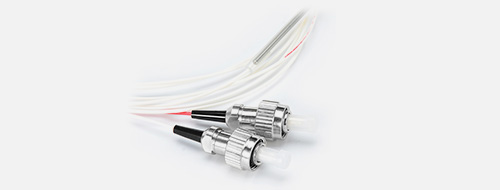
Product Image
Product Applications
1. Optical communication system: Variable optical attenuators are commonly used in optical communication systems to regulate the strength of the optical signal to ensure the quality and stability of the optical signal transmission.
2. Fiber optic sensors: Variable optical attenuators are also commonly used in fiber optic sensors to adjust the strength of the optical signal to achieve the measurement and monitoring of physical quantities.
3. Optical measuring instruments: Variable optical attenuators are also commonly used in optical measuring instruments to adjust the intensity of the optical signal to ensure the accuracy and reliability of the measurement results.
4. Optical test equipment: Variable optical attenuators are also commonly used in optical test equipment to simulate different optical signal strengths in order to test and verify the performance of optical equipment.
5. Optical labs: Variable optical attenuators are also commonly used in optical labs to adjust the intensity of optical signals for various optical experiments and research.
Product Parameters
| Adjustment Range | 0~30dB | Response time | <10ms |
| Wavelength Range | 1260~1650nm | Operating Temperature | -5~+70℃ |
| Insertion Loss | <1.5dB | Storage Temperature | -40~+85℃ |
| Reflection Loss | >50dB | Fiber Type | Single Mode Fiber |
| Stability | <0.1dB | Interface Type | FC/PC, SC/PC, ST/PC, LC/PC, etc. |
Lnstructions For Use
1. Installation: The variable optical attenuator should be installed in a suitable location in the fiber optic communication system to facilitate the regulation of the optical signal. Before installation, the interface type of the device and the interface type of the fiber need to be checked for matching.
2. Adjustment: The adjustment of the variable optical attenuator can be achieved by manual rotation or electronic control. When making adjustments, you need to pay attention to the size of the adjustment amplitude and the speed of the adjustment to avoid the impact on the optical signal.
3. Test: When using the variable optical attenuator, a corresponding test is required to verify its adjustment effect and stability. The test method can use optical test equipment such as optical power meter or spectrometer.
Terms of Use
1. Check before installation: Before installing the variable optical attenuator, you need to check whether the interface type of the device and the interface type of the optical fiber match to ensure the correct installation.
2. Adjustment amplitude: When making the adjustment, you need to pay attention to the size of the adjustment amplitude to avoid the impact on the optical signal. Usually, the adjustment amplitude of the variable optical attenuator should be controlled within a suitable range to ensure the stability of the optical signal.
3. Adjustment speed: When making adjustments, attention needs to be paid to the speed of adjustment to avoid the impact on the optical signal. Usually, the adjustment speed of the variable optical attenuator should be controlled within a suitable range to ensure the stability of the optical signal.
4. Optical power control: When using the variable optical attenuator, attention needs to be paid to the control of the optical power. Usually, the adjustment amplitude and adjustment speed of the variable optical attenuator should be controlled within a suitable range to ensure the stability of the optical power.
5. Temperature control: When using variable optical attenuators, attention needs to be paid to the control of temperature. Usually, the operating temperature of the variable optical attenuator should be controlled within a suitable range to ensure the stability of the device.
Customer Comments
John Smith from New York, NY, USA: Comments
Marie Dupont, Paris, France: Comments
David Lee from Vancouver, Canada: Comments
Emily Brown from Sydney, Australia: Comments
Thabo Mbeki from Cape Town, South Africa: Comments
Related Blogs
Product Video
You Might Also Like


