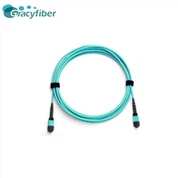
Fiber Optic Patch Cord Pigtail-Standard Fiber Optic Pigtail
Fiber optic patch cord pigtail is a fiber optic connector for high-speed data transmission, which features high transmission rate, low insertion loss and high return loss, high durability and easy installation. Fiber optic patch cord pigtail is widely used in communication, data center, radio and television, transportation, medical, defense and industrial automation.

- Product Introduction
Fiber optic patch cord pigtail is a fiber optic connector for high-speed data transmission, which features high transmission rate, low insertion loss and high return loss, high durability and easy installation. Fiber optic patch cord pigtail is widely used in communication, data center, radio and television, transportation, medical, defense and industrial automation.
The steps of using fiber optic patch cord pigtail are very simple, just insert the fiber into the interface of the patch cord pigtail, and then insert the other end of the patch cord pigtail into the interface of the equipment. Because of the high transmission rate of fiber optic patch cord pigtail, it can greatly improve the speed and efficiency of data transmission, making data transmission more stable and reliable.
If you are looking for a high-speed data transmission fiber optic connectors, then fiber optic patch cord pigtail will be your second choice. Our product quality is excellent, affordable price, thoughtful service, welcome your call or email inquiries.
Product Features
1. high transmission rate: fiber optic patch cord pigtail uses optical fiber to transmit signals at rates up to tens of Gbps, which is much faster than traditional copper patch cord pigtail.
2. low insertion loss and high return loss: fiber optic patch cord pigtail has very low insertion loss and high return loss, which can ensure the stability and reliability of signal transmission.
3. High durability: Fiber optic patch cord pigtail is made of high quality material, which has strong durability and can withstand the test of harsh environment.
4. Easy installation: The installation of fiber optic patch cord pigtail is very easy, just insert the fiber into the connector, no need to use special tools.
Product Image


Product Applications
1. Communication field: fiber optic patch cord pigtails are widely used in communication field, such as fiber optic communication, fiber optic network, fiber optic broadband, etc.. Due to its high speed transmission and low insertion loss, it can provide more stable and reliable data transmission service for communication system.
2. Data Center: In data centers, fiber optic patch cord pigtails are used to connect servers, storage and network equipment for fast and efficient data transmission. It can provide higher bandwidth and lower latency, thus improving the performance and efficiency of data centers.
3. Broadcast TV: In the field of broadcast TV, fiber optic patch cord pigtails are widely used for video transmission, such as HD video, 3D video, interactive video, etc.. Due to its high definition and stability, it can provide better video transmission services for broadcast TV systems.
4. Transportation: In the field of transportation, fiber optic patch cord pigtails are used in traffic signal lights, highway monitoring, train signal control, etc.. Due to its high-speed transmission and stability, it can provide better data transmission services for transportation systems.
5. Medical: In the medical field, fiber optic patch cord pigtails are used for data transmission and image transmission of medical equipment, such as medical images, surgical instruments, etc.. Due to its high definition and stability, it can provide better data and image transmission services for medical systems.
Product Parameters
| Fiber Diameter | 9/125um | Fiber Connection Method | UPC |
| Reflection loss | ≥50dB | Insertion loss | ≤0.3dB |
| Operating temperature | -40℃~+85℃ | Durable times | ≥1000 times |
| Housing Material | PVC/LSZH | Pigtail Length | 1m/2m/3m/5m/ |
Instructions For Use
1. Preparation: Before using fiber optic patch cord pigtails, you need to prepare the required equipment and tools, including fiber optic patch cord pigtails, fiber optic connectors, fiber optic cutting knives, fiber optic cleaners, etc.
2. Cut the fiber: cut the two fibers to be connected to the required length with fiber cutting knife respectively, and clean the fiber surface with fiber cleaner at the cut to ensure the quality of the connection.
3. Install the fiber optic connector: insert the fiber optic connector into both ends of the fiber optic patch cord pigtail, make sure the contact surface of the connector and the fiber is clean, flat and free of scratches, and crimp the connector with the fiber optic connector crimping tool.
4. Connect the fiber: connect the fiber optic patch cord pigtail with fiber optic connectors installed at both ends to the device to be connected to ensure the quality of the connection.
5. Check the connection: After the connection is completed, use the fiber optic tester to check the quality of the connection to ensure the transmission quality is stable and error-free.
Terms Of Use
1. Make sure the correct type and specification of fiber optic patch cord pigtail is selected to ensure its compatibility with other devices.
2. Before connecting the fiber optic equipment, please make sure the connecting end of the fiber optic patch cord pigtail is clean and free of impurities such as oil or dust to ensure the quality of the connection.
3. When connecting fiber optic devices, please pay attention to the direction of the fiber optic patch cord pigtails to ensure that the fiber optic patch cord pigtails at both ends of the connection are in the same direction to avoid connection errors.
4. When connecting fiber optic devices, avoid excessive bending or stretching of the fiber optic patch cord pigtail to avoid damaging the internal structure of the fiber optic patch cord pigtail and affecting the connection quality.
5. When connecting fiber optic devices, avoid interference between fiber optic patch cord pigtails and other cables or devices to avoid affecting the stability of the connection and transmission quality.
Customer Comments
David, a user from California, USA, commented:
Yuki from Tokyo, Japan commented:
Hans from Frankfurt, Germany commented:
Emily, a user from Sydney, Australia, commented:
Lucas from Sao Paulo, Brazil commented:
Related Blogs
Product Video
You Might Also Like